Explore the range of squash rackets and their features


Explore the range of squash rackets and their features
Squash is an intense and technical sport where the equipment plays a crucial role in both precision and comfort. The choice of squash racket can affect everything from shot power to control and mobility on the court. Whether you are a beginner or an experienced player, it can be a challenge to find the racket that best suits your playing style and level.
In this article, you will get an overview of the most important factors to consider when choosing a squash racket, as well as insight into the different types and brands that dominate the market.
The article presents a wide range of squash rackets in different price ranges and with varying characteristics. The aim is to provide an informative overview of the most relevant specifications and differences, so you can more easily assess which type of racket best suits your needs. The product information is based on publicly available descriptions from manufacturers and retailers and is summarised to provide a clear and neutral overview.
Factors to consider when buying a squash racket
When choosing a squash racket, it is important to take into account weight, balance, frame shape and string pattern. These factors affect how the racket feels in your hand and how you can control the ball.
1. Weight
Squash rackets typically weigh between 110 and 170 grams. A lighter racket provides faster swings and better manoeuvrability, which suits players who focus on quick reactions and precise shots. A heavier racket can provide more power in shots and stability, which often appeals to players with a more powerful playing style.
2. Balance point
The balance point indicates whether the weight is distributed towards the head or the handle. A head-heavy racket provides more power, while a head-light model offers better control and faster movement. Many players choose a neutral balance to get a combination of both characteristics.
3. Frame shape and head size
Rackets with a teardrop-shaped head often provide more power, as the strings are longer and can generate extra speed on the ball. Traditional head shapes, on the other hand, offer better control and precision. The head size also affects the sweet spot – a larger head is more forgiving, while a smaller head requires more precision.
4. Materials
Most modern squash rackets are made of graphite, carbon fibre or a combination of lightweight materials. These materials provide a good balance between strength and flexibility. Some models include vibration-damping technologies that increase comfort during play.
5. String pattern and tension
A dense string pattern provides better control, while a more open pattern can increase the ball’s speed and spin. String tension can be adjusted according to preference – high tension provides precision, while low tension increases power and comfort.
Products in focus
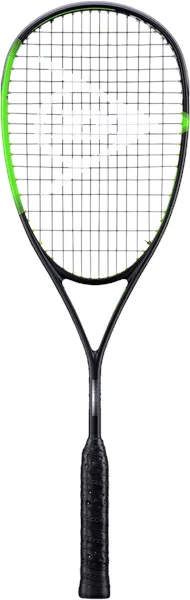
The Dunlop Soniccore Elite 135 HL is designed for the experienced squash player who wants a racket with a balanced combination of power and control. With a weight of 135 grams and a head-light balance, it provides quick manoeuvrability and precise ball handling.
The frame is made with Sonic Core technology, where selected areas consist of Infinergy® material. This material contributes to increased elasticity, reduced vibrations, and better energy utilisation with each shot.
With a head size of 500 cm², the racket offers a solid sweet spot that supports both precision and stability during play. It is therefore an ideal choice for players who want a technical racket with modern materials and well-balanced performance.
- Sonic Core technology: Reduces vibrations and improves energy transfer on impact.
- Infinergy® material: Provides increased elasticity and low weight.
- Head Light balance: Makes the racket quick and easy to manoeuvre.
- Weight of 135 g: Combines stability with quick responsiveness.
- Head size of 500 cm²: Provides a good sweet spot for precise shots.
Pros and cons
- Low weight and head-light balance for quick manoeuvring
- Advanced material technology with Sonic Core and Infinergy®
- Good combination of control and power
- Suitable for advanced and elite players
- May feel too light for players who prefer heavier rackets
- Requires technical precision to fully utilise its potential
Pros and cons
Pros
- Low weight and head-light balance for quick manoeuvring
- Advanced material technology with Sonic Core and Infinergy®
- Good combination of control and power
- Suitable for advanced and elite players
Cons
- May feel too light for players who prefer heavier rackets
- Requires technical precision to fully utilise its potential
Pros
- Low weight and head-light balance for quick manoeuvring
- Advanced material technology with Sonic Core and Infinergy®
- Good combination of control and power
- Suitable for advanced and elite players
Cons
- May feel too light for players who prefer heavier rackets
- Requires technical precision to fully utilise its potential
Specifications
- Manufacturer: Dunlop
- Model: DU302632IONE SIZE
- EAN: 0045566201164
- Item number: 3135693
- Weight: 135 g
- Balance: Head Light
- Head size: 500 cm²
- Material: Sonic Core with Infinergy®
Product descriptions
The Dunlop Soniccore Elite 135 HL is designed for the experienced squash player who wants a racket with a balanced combination of power and control. With a weight of 135 grams and a head-light balance, it provides quick manoeuvrability and precise ball handling.
The frame is made with Sonic Core technology, where selected areas consist of Infinergy® material. This material contributes to increased elasticity, reduced vibrations, and better energy utilisation with each shot.
With a head size of 500 cm², the racket offers a solid sweet spot that supports both precision and stability during play. It is therefore an ideal choice for players who want a technical racket with modern materials and well-balanced performance.
- Sonic Core technology: Reduces vibrations and improves energy transfer on impact.
- Infinergy® material: Provides increased elasticity and low weight.
- Head Light balance: Makes the racket quick and easy to manoeuvre.
- Weight of 135 g: Combines stability with quick responsiveness.
- Head size of 500 cm²: Provides a good sweet spot for precise shots.
Pros and cons
- Low weight and head-light balance for quick manoeuvring
- Advanced material technology with Sonic Core and Infinergy®
- Good combination of control and power
- Suitable for advanced and elite players
- May feel too light for players who prefer heavier rackets
- Requires technical precision to fully utilise its potential
Pros and cons
Pros
- Low weight and head-light balance for quick manoeuvring
- Advanced material technology with Sonic Core and Infinergy®
- Good combination of control and power
- Suitable for advanced and elite players
Cons
- May feel too light for players who prefer heavier rackets
- Requires technical precision to fully utilise its potential
Pros
- Low weight and head-light balance for quick manoeuvring
- Advanced material technology with Sonic Core and Infinergy®
- Good combination of control and power
- Suitable for advanced and elite players
Cons
- May feel too light for players who prefer heavier rackets
- Requires technical precision to fully utilise its potential
Specifications
- Manufacturer: Dunlop
- Model: DU302632IONE SIZE
- EAN: 0045566201164
- Item number: 3135693
- Weight: 135 g
- Balance: Head Light
- Head size: 500 cm²
- Material: Sonic Core with Infinergy®
Different types of squash rackets
There are several types of squash rackets, each aimed at different playing styles and levels.
1. Lightweight rackets
These models are popular among technically skilled players who prioritise quick reactions and precise shots. They are ideal for players who move quickly around the court and play with finesse rather than raw power.
2. Power rackets
Power rackets often have a head-heavy balance and a teardrop-shaped head. They provide extra power in shots and are well suited to players who want to dominate the game with offensive strokes.
3. Control rackets
Control rackets are typically slightly heavier and have a more compact head. They provide stability and precision, making them suitable for players who focus on placement and strategy.
4. All-round rackets
All-round models combine features from both power and control rackets. They are a good choice for players who want flexibility and versatility in their game.
Different brands of squash rackets
The market for squash rackets is characterised by several well-known brands, each with its own focus areas and technological features.
Dunlop
Dunlop is one of the most recognised brands in squash and offers a wide range of rackets for all levels. The brand is known for its high quality and innovative technologies that improve control and power.
Head
Head produces rackets with a focus on balance and comfort. Many models feature advanced vibration-damping systems and lightweight frames, making them popular among both recreational and professional players.
Tecnifibre
Tecnifibre is known for its precision-oriented rackets and high-quality strings. The brand particularly appeals to players who prioritise control and feel for the ball.
Prince
Prince has for many years been synonymous with innovation in racket technology. Their models often feature unique frame designs that increase the sweet spot and provide extra power in shots.
Karakal
Karakal focuses on ultra-light rackets with high manoeuvrability. The brand is popular among players who want quick reactions and a light feel in the hand.
Frequently asked questions
What weight should I choose for my squash racket?
It depends on your playing style. Lightweight rackets (110–130 g) provide faster reactions, while heavier models (140–170 g) offer more power and stability. Try different weights to find the one that feels most natural.
How often should I replace the strings?
The strings should be replaced when they lose tension or start to fray. Frequent players should change strings several times a year, while occasional players can manage with once a year.
Can I use a tennis racket for squash?
No, squash rackets are specifically designed for squash with lighter weight, smaller head and shorter shaft. A tennis racket would be too heavy and unsuitable for the fast pace of squash.
How do I maintain my squash racket?
Avoid hitting the racket against the wall and store it in a protective cover. Check the strings regularly and make sure the grip is replaced when it becomes slippery or worn.
Which type of racket is best for beginners?
Beginners should choose a light all-round racket with a large sweet spot and neutral balance. This makes it easier to hit the ball cleanly and develop a stable technique.
Læs også: