Choose the right ground cover plant – a simple guide



Choose the right ground cover plant – a simple guide
Ground cover plants are an effective and aesthetic way to keep the garden lush and weed-free. They cover the soil with a dense layer of leaves and shoots that both protect against drying out and inhibit weed growth. At the same time, they add structure, colour and life to the garden's borders, slopes and under trees.
In this article, you will get an overview of what to consider when choosing ground cover plants, as well as an introduction to different types and brands that can help you find the solution that best suits your garden.
The article presents a wide selection of ground cover plants – from classic evergreen varieties to flowering ones. The aim is to provide an overview of characteristics, growth habits and areas of use so that you can more easily assess which plants are best suited to your conditions. The information about the products is based on publicly available descriptions from manufacturers and retailers and is summarised to provide a clear and informative overview.
Factors to consider when buying ground cover plants
When choosing ground cover plants, it is important to consider both the planting site, maintenance and the look you want in the garden. Here are some of the most important factors to consider.
1. Light conditions and soil type
Some ground cover plants thrive best in full sun, while others prefer shade. Look at where in the garden the plants will grow and choose varieties that suit the light conditions. The soil type also plays a role – sandy soil requires plants that tolerate drought, while clay soil is better suited for moisture-loving species.
2. Growth rate and height
Ground cover plants vary in growth rate and height. Fast-growing varieties cover the soil quickly but may require more pruning. Low-growing species give a calm appearance and require less maintenance. Consider how dense and tall you want the planting to be.
3. Flowering and colour
Many ground cover plants have beautiful flowers that can add colour to the garden during different seasons. If you want a green carpet all year round, you can choose evergreen varieties such as ivy or cotoneaster. If you prefer floral splendour, species such as cranesbill or wild strawberry can be good choices.
4. Maintenance
One of the biggest advantages of ground cover plants is that they reduce the need for weeding. Still, some varieties require more care than others. Consider how much time you want to spend on pruning, watering and removing dead parts.
5. Purpose and placement
Ground cover plants can be used for many purposes – from stabilising slopes to creating green areas under shrubs and trees. Think about whether you want a decorative, practical or combined solution and choose plants accordingly.
Products in focus
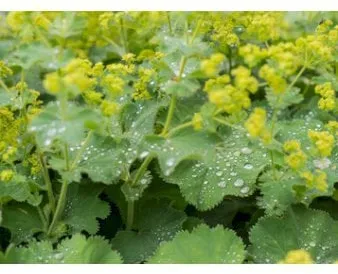
Soft lady's mantle (Alchemilla mollis) is a perennial used as ground cover in gardens and green spaces. It forms a low, dense plant with soft, slightly hairy leaves that collect dewdrops and give the plant a characteristic appearance.
The plant thrives in both sun and partial shade and does well in ordinary garden soil. It usually grows 30–50 cm tall and 20–40 cm wide and spreads evenly, making it suitable for covering the ground and suppressing weeds.
Flowering occurs from June to September, when small lime-green to yellow-green flowers gather in loose clusters. The light flower clusters provide a fresh colour variation in the border without appearing dominant.
The foliage is decorative and can be used in bouquets and decorations. The plant is hardy, easy to grow and requires minimal maintenance, making it suitable for both private gardens and larger plantings.
- Long flowering period: From June to September with lime-green flowers.
- Decorative foliage: Soft, hairy leaves with a characteristic shape.
- Suitable as ground cover: Forms a dense green mat that suppresses weeds.
- Undemanding and hardy: Thrives in sun to partial shade and ordinary garden soil.
- Suitable for cutting: The foliage can be used in bouquets and decorations.
Pros and cons
- Easy to grow and requires minimal maintenance
- Tolerates both sun and partial shade
- Long flowering period
- Effective as ground cover
- Decorative in both borders and bouquets
- Can spread more than desired if not kept in check
- The flowers may appear discreet in colour compared to more colourful perennials
Pros and cons
Pros
- Easy to grow and requires minimal maintenance
- Tolerates both sun and partial shade
- Long flowering period
- Effective as ground cover
- Decorative in both borders and bouquets
Cons
- Can spread more than desired if not kept in check
- The flowers may appear discreet in colour compared to more colourful perennials
Pros
- Easy to grow and requires minimal maintenance
- Tolerates both sun and partial shade
- Long flowering period
- Effective as ground cover
- Decorative in both borders and bouquets
Cons
- Can spread more than desired if not kept in check
- The flowers may appear discreet in colour compared to more colourful perennials
Specifications
- Botanical name: Alchemilla mollis
- Swedish name: Soft lady's mantle
- Plant height: 30–50 cm
- Plant width: 20–40 cm
- Flowering time: June–September
- Flower colour: Lime-green to yellow-green
- Leaf colour: Green
- Light conditions: Full sun to partial shade
- Soil type: Ordinary garden soil, medium nutrient level
- Planting density: 6–9 plants per m²
- Growth form: Ground-covering, medium-growing
- Hardiness: Fully hardy
- Use: Gardens and parks, ground cover, cutting
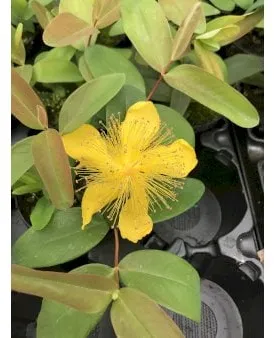
St. John's Wort (Hypericum calycinum) is a ground cover plant that forms a dense green carpet in the garden. It is partially evergreen and has elongated green leaves on reddish stems, giving a lively appearance all year round.
The plant blooms from July to September with large yellow flowers that have long pistils and add colour and structure to the border. It can be used both as ground cover and as a cut flower in bouquets.
St. John's Wort spreads quickly via root shoots and tolerates pruning, making it suitable for covering larger areas. It thrives best in good soil and does well in both sun and partial shade.
With a height of about 30–50 cm and a planting distance of about 55 cm, it is suitable for creating a uniform, low plant cover that is also robust against the Swedish climate.
- Long flowering period: Blooms from July to September with large yellow flowers.
- Robust growth: Tolerates pruning and spreads effectively via root shoots.
- Partially evergreen: Retains some of its foliage during winter.
- Suitable ground cover: Forms a dense green carpet that suppresses weeds.
- Thrives in sun and partial shade: Adapts to different light conditions and soil types.
Pros and cons
- Hardy and undemanding plant that thrives in the Swedish climate
- Long flowering period with decorative yellow flowers
- Requires minimal maintenance after establishment
- Suitable for both sun and partial shade
- Can be used as ground cover or in bouquets
- Spreads quickly and may require control to avoid unwanted spread
- Requires regular fertilisation for optimal growth and flowering
Pros and cons
Pros
- Hardy and undemanding plant that thrives in the Swedish climate
- Long flowering period with decorative yellow flowers
- Requires minimal maintenance after establishment
- Suitable for both sun and partial shade
- Can be used as ground cover or in bouquets
Cons
- Spreads quickly and may require control to avoid unwanted spread
- Requires regular fertilisation for optimal growth and flowering
Pros
- Hardy and undemanding plant that thrives in the Swedish climate
- Long flowering period with decorative yellow flowers
- Requires minimal maintenance after establishment
- Suitable for both sun and partial shade
- Can be used as ground cover or in bouquets
Cons
- Spreads quickly and may require control to avoid unwanted spread
- Requires regular fertilisation for optimal growth and flowering
Specifications
- Botanical name: Hypericum calycinum
- Category: Ground cover plant
- Height: 30–50 cm
- Width: 10–20 cm
- Plant spacing: approx. 55 cm
- Flower colour: Yellow
- Flowering period: July–September
- Leaf colour: Green
- Light conditions: Full sun or partial shade
- Growth form: Upright
- Growth type: Medium-growing
- Hardiness: Fully hardy in Swedish climate
- Use: Ground cover, gardens, cut flowers
- Fertilisation level: Medium
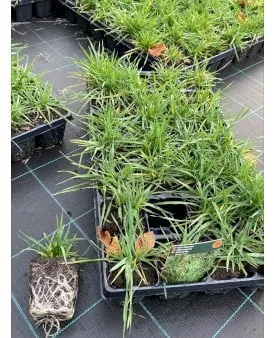
Quaking grass (Briza media) is a perennial ornamental grass that forms low tufts with short runners. It grows best in light to partial shade and prefers calcareous soil. The plant is native to Denmark and occurs naturally in meadows and heaths.
The grass reaches about 30 cm in height, while the seed heads can reach up to 40 cm. The small, heart-shaped seed heads hang lightly on thin stems and move in the wind, giving a light and lively feel to the planting.
The colour of the seed heads changes during the season – from blue-green in spring to golden brown in late summer. Flowering occurs from May to August, and the seeds are readily eaten by small birds.
Quaking grass is well suited for group planting, where 9 plants per square metre provide dense and natural coverage. It can be used as ground cover along lawns, in perennial borders or in more naturalistic gardens.
- Low-growing tufted grass: Forms dense tufts with short runners.
- Decorative seed heads: Small heart-shaped seed heads that move lightly in the wind.
- Colour change during the season: From blue-green to golden brown seed heads.
- Flowering period: May to August.
- Native species: Occurs naturally in Denmark and is a host plant for the meadow brown butterfly.
Pros and cons
- Natural appearance and movement in the planting
- Suitable as ground cover in light to partial shade
- Low maintenance level and robust growth
- Attracts insects and birds
- Requires well-drained and preferably calcareous soil to thrive optimally
- May appear delicate as a solitary plant and is best suited in groups
Pros and cons
Pros
- Natural appearance and movement in the planting
- Suitable as ground cover in light to partial shade
- Low maintenance level and robust growth
- Attracts insects and birds
Cons
- Requires well-drained and preferably calcareous soil to thrive optimally
- May appear delicate as a solitary plant and is best suited in groups
Pros
- Natural appearance and movement in the planting
- Suitable as ground cover in light to partial shade
- Low maintenance level and robust growth
- Attracts insects and birds
Cons
- Requires well-drained and preferably calcareous soil to thrive optimally
- May appear delicate as a solitary plant and is best suited in groups
Specifications
- Botanical name: Briza media
- Swedish name: Quaking grass
- Plant height: Tufts approx. 30 cm, seed heads up to 40 cm
- Growth form: Tuft-forming with short runners
- Placement: Light to partial shade
- Flowering period: May–August
- Planting density: 9 plants per m²
- Category: Ground-covering perennials
- Main category: Ground cover
- Origin: Native to Denmark
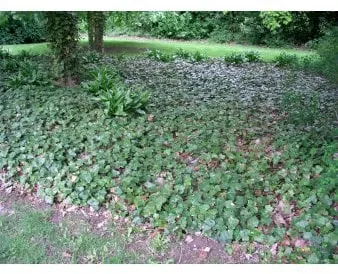
Large-leaved ivy (Hedera hibernica) is an evergreen plant used as ground cover or a climbing plant. It forms a dense, green mat that effectively suppresses weeds and helps retain soil moisture. The plant has large, dark green, heart-shaped leaves and a vigorous growth habit, making it suitable for covering larger areas.
The ivy thrives best in ordinary, well-drained soil and can grow in sun, partial shade, and shade. However, it prefers slightly acidic soil and does particularly well on north-facing slopes. For optimal growth, fertilise with ammonium sulphate if the plants show signs of weak development.
The plant is fully hardy and retains its foliage all year round, providing a stable green appearance through all seasons. It can be used as ground cover under shrubs and trees or as a climbing plant on walls and fences. When planting, 8–10 plants per square metre are recommended to achieve uniform coverage.
Large-leaved ivy is also known to attract insects such as the holly blue butterfly, which can contribute to increased biodiversity in the garden.
- Evergreen: Retains its leaves all year round and provides a green appearance year-round.
- Versatile use: Can be used both as ground cover and as a climbing plant.
- Shade tolerant: Thrives in sun, partial shade, and shade.
- Low maintenance: Requires pruning only if it spreads too much.
- Hardy: Tolerates the Danish climate and grows in ordinary garden soil.
Pros and cons
- Forms a dense and lasting ground cover
- Suitable for shady areas
- Can also be used as a climbing plant
- Evergreen and hardy
- Requires minimal maintenance after establishment
- Can spread vigorously and requires pruning to be kept in place
- Prefers slightly acidic soil and may perform less well in heavy, wet soil
Pros and cons
Pros
- Forms a dense and lasting ground cover
- Suitable for shady areas
- Can also be used as a climbing plant
- Evergreen and hardy
- Requires minimal maintenance after establishment
Cons
- Can spread vigorously and requires pruning to be kept in place
- Prefers slightly acidic soil and may perform less well in heavy, wet soil
Pros
- Forms a dense and lasting ground cover
- Suitable for shady areas
- Can also be used as a climbing plant
- Evergreen and hardy
- Requires minimal maintenance after establishment
Cons
- Can spread vigorously and requires pruning to be kept in place
- Prefers slightly acidic soil and may perform less well in heavy, wet soil
Specifications
- Botanical name: Hedera hibernica
- Plant category: Ground cover / Ivy
- Use: Ground cover, climbing plant on walls and trees
- Leaf colour: Green to dark green
- Leaf shape: Heart-shaped
- Growth habit: Climbing, self-adhesive
- Placement: Sun, partial shade, shade
- Height: 800–1000 cm (as a climbing plant)
- Hardiness: Fully hardy
- Fertilisation level: Medium
- Planting density: 8–10 plants per m²
- Soil type: Ordinary, well-drained, slightly acidic soil
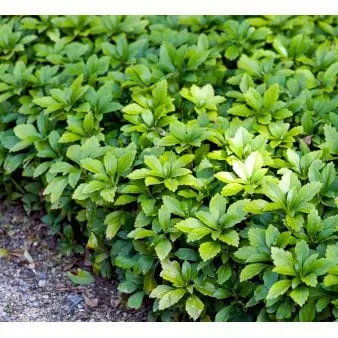
Japanese Spurge (Pachysandra terminalis) is a low-growing, evergreen plant often used as ground cover in gardens and parks. It forms dense, green mats that effectively cover the ground and suppress weeds.
The plant thrives best in partial shade to shade and prefers acidic soil. It has oval, dark green leaves that retain their colour all year round, and in spring it develops small, white flowers with a subtle appearance.
Japanese Spurge grows moderately and reaches about 25 cm in height with a width of 20–40 cm. It is completely hardy and therefore well suited to the Danish climate. With a planting distance of 35–50 cm, it can quickly form a dense plant cover.
The plant is typically used under trees, in shady borders or on slopes, where it contributes to a green and uniform appearance all year round.
- Evergreen ground cover: Retains its green colour all year round.
- Shade-tolerant: Thrives in partial shade and shady areas.
- Low-growing plant: About 25 cm high and 20–40 cm wide.
- Spring flowering: Small white flowers in May.
- Robust and hardy: Suitable for Danish conditions and requires minimal maintenance.
Pros and cons
- Evergreen and decorative all year round
- Suitable for shady areas
- Requires little maintenance
- Effectively suppresses weeds as ground cover
- Completely hardy in the Danish climate
- Does not thrive in full sun or dry soil
- Growth is moderate, so full coverage may take time
Pros and cons
Pros
- Evergreen and decorative all year round
- Suitable for shady areas
- Requires little maintenance
- Effectively suppresses weeds as ground cover
- Completely hardy in the Danish climate
Cons
- Does not thrive in full sun or dry soil
- Growth is moderate, so full coverage may take time
Pros
- Evergreen and decorative all year round
- Suitable for shady areas
- Requires little maintenance
- Effectively suppresses weeds as ground cover
- Completely hardy in the Danish climate
Cons
- Does not thrive in full sun or dry soil
- Growth is moderate, so full coverage may take time
Specifications
- Botanical name: Pachysandra terminalis
- Plant height: approx. 25 cm
- Width: 20–40 cm
- Flower colour: White, greenish
- Flowering period: Spring (May)
- Leaf colour: Green to dark green
- Leaf shape: Oval
- Light conditions: Partial shade to shade
- Soil type: Acidic soil
- Plant form: Ground cover
- Growth: Moderate
- Hardiness: Completely hardy
- Plant spacing: 35–50 cm
- Use: Gardens and parks, ground cover under trees
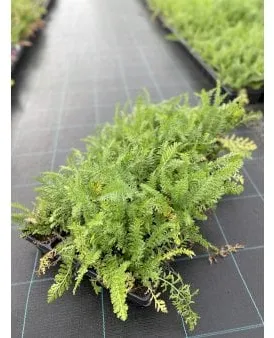
Yarrow (Achillea millefolium) is a hardy perennial that forms dense clumps and is well suited as ground cover in sunny gardens. It grows best in well-drained soil and can be used for naturalising, where it quickly spreads and covers the ground effectively.
The plant grows to about 60 cm tall and develops flat flower clusters with many small white flowers, which at the end of flowering may take on a slightly pink hue. Flowering occurs from July to September.
Yarrow has finely divided, fragrant foliage and tolerates drought. It is suitable for cutting and drying and has historically been used as a medicinal plant. The species attracts many insects, including bees, hoverflies and butterflies, and serves as a host plant for several moths.
When planting, a density of about six plants per square metre is recommended to achieve a continuous ground cover.
- Light growing site: Thrives best in sun and well-drained soil.
- Height: About 60 cm at full growth.
- Flowering: July to September with white to slightly pink flowers.
- Drought-tolerant: Suitable for areas with limited watering.
- Insect-friendly: Attracts bees, butterflies and other pollinators.
Pros and cons
- Robust and drought-tolerant perennial
- Suitable as ground cover and for naturalising
- Long flowering period in mid-summer
- Attracts many beneficial insects
- Can be used for cutting and drying
- Requires sun and well-drained soil for optimal growth
- Can spread vigorously, requiring control in smaller borders
Pros and cons
Pros
- Robust and drought-tolerant perennial
- Suitable as ground cover and for naturalising
- Long flowering period in mid-summer
- Attracts many beneficial insects
- Can be used for cutting and drying
Cons
- Requires sun and well-drained soil for optimal growth
- Can spread vigorously, requiring control in smaller borders
Pros
- Robust and drought-tolerant perennial
- Suitable as ground cover and for naturalising
- Long flowering period in mid-summer
- Attracts many beneficial insects
- Can be used for cutting and drying
Cons
- Requires sun and well-drained soil for optimal growth
- Can spread vigorously, requiring control in smaller borders
Specifications
- Botanical name: Achillea millefolium
- Plant height: approx. 60 cm
- Planting density: 6 plants per m²
- Flowering period: July–September
- Flower colour: White, sometimes light pink towards the end of flowering
- Growing conditions: Light growing site, well-drained soil
- Characteristics: Drought-tolerant, fragrant foliage, suitable for cutting and drying
- Category: Ground-covering perennials
- Main category: Ground cover
Product descriptions
Soft lady's mantle (Alchemilla mollis) is a perennial used as ground cover in gardens and green spaces. It forms a low, dense plant with soft, slightly hairy leaves that collect dewdrops and give the plant a characteristic appearance.
The plant thrives in both sun and partial shade and does well in ordinary garden soil. It usually grows 30–50 cm tall and 20–40 cm wide and spreads evenly, making it suitable for covering the ground and suppressing weeds.
Flowering occurs from June to September, when small lime-green to yellow-green flowers gather in loose clusters. The light flower clusters provide a fresh colour variation in the border without appearing dominant.
The foliage is decorative and can be used in bouquets and decorations. The plant is hardy, easy to grow and requires minimal maintenance, making it suitable for both private gardens and larger plantings.
- Long flowering period: From June to September with lime-green flowers.
- Decorative foliage: Soft, hairy leaves with a characteristic shape.
- Suitable as ground cover: Forms a dense green mat that suppresses weeds.
- Undemanding and hardy: Thrives in sun to partial shade and ordinary garden soil.
- Suitable for cutting: The foliage can be used in bouquets and decorations.
Pros and cons
- Easy to grow and requires minimal maintenance
- Tolerates both sun and partial shade
- Long flowering period
- Effective as ground cover
- Decorative in both borders and bouquets
- Can spread more than desired if not kept in check
- The flowers may appear discreet in colour compared to more colourful perennials
Pros and cons
Pros
- Easy to grow and requires minimal maintenance
- Tolerates both sun and partial shade
- Long flowering period
- Effective as ground cover
- Decorative in both borders and bouquets
Cons
- Can spread more than desired if not kept in check
- The flowers may appear discreet in colour compared to more colourful perennials
Pros
- Easy to grow and requires minimal maintenance
- Tolerates both sun and partial shade
- Long flowering period
- Effective as ground cover
- Decorative in both borders and bouquets
Cons
- Can spread more than desired if not kept in check
- The flowers may appear discreet in colour compared to more colourful perennials
Specifications
- Botanical name: Alchemilla mollis
- Swedish name: Soft lady's mantle
- Plant height: 30–50 cm
- Plant width: 20–40 cm
- Flowering time: June–September
- Flower colour: Lime-green to yellow-green
- Leaf colour: Green
- Light conditions: Full sun to partial shade
- Soil type: Ordinary garden soil, medium nutrient level
- Planting density: 6–9 plants per m²
- Growth form: Ground-covering, medium-growing
- Hardiness: Fully hardy
- Use: Gardens and parks, ground cover, cutting
St. John's Wort (Hypericum calycinum) is a ground cover plant that forms a dense green carpet in the garden. It is partially evergreen and has elongated green leaves on reddish stems, giving a lively appearance all year round.
The plant blooms from July to September with large yellow flowers that have long pistils and add colour and structure to the border. It can be used both as ground cover and as a cut flower in bouquets.
St. John's Wort spreads quickly via root shoots and tolerates pruning, making it suitable for covering larger areas. It thrives best in good soil and does well in both sun and partial shade.
With a height of about 30–50 cm and a planting distance of about 55 cm, it is suitable for creating a uniform, low plant cover that is also robust against the Swedish climate.
- Long flowering period: Blooms from July to September with large yellow flowers.
- Robust growth: Tolerates pruning and spreads effectively via root shoots.
- Partially evergreen: Retains some of its foliage during winter.
- Suitable ground cover: Forms a dense green carpet that suppresses weeds.
- Thrives in sun and partial shade: Adapts to different light conditions and soil types.
Pros and cons
- Hardy and undemanding plant that thrives in the Swedish climate
- Long flowering period with decorative yellow flowers
- Requires minimal maintenance after establishment
- Suitable for both sun and partial shade
- Can be used as ground cover or in bouquets
- Spreads quickly and may require control to avoid unwanted spread
- Requires regular fertilisation for optimal growth and flowering
Pros and cons
Pros
- Hardy and undemanding plant that thrives in the Swedish climate
- Long flowering period with decorative yellow flowers
- Requires minimal maintenance after establishment
- Suitable for both sun and partial shade
- Can be used as ground cover or in bouquets
Cons
- Spreads quickly and may require control to avoid unwanted spread
- Requires regular fertilisation for optimal growth and flowering
Pros
- Hardy and undemanding plant that thrives in the Swedish climate
- Long flowering period with decorative yellow flowers
- Requires minimal maintenance after establishment
- Suitable for both sun and partial shade
- Can be used as ground cover or in bouquets
Cons
- Spreads quickly and may require control to avoid unwanted spread
- Requires regular fertilisation for optimal growth and flowering
Specifications
- Botanical name: Hypericum calycinum
- Category: Ground cover plant
- Height: 30–50 cm
- Width: 10–20 cm
- Plant spacing: approx. 55 cm
- Flower colour: Yellow
- Flowering period: July–September
- Leaf colour: Green
- Light conditions: Full sun or partial shade
- Growth form: Upright
- Growth type: Medium-growing
- Hardiness: Fully hardy in Swedish climate
- Use: Ground cover, gardens, cut flowers
- Fertilisation level: Medium
Quaking grass (Briza media) is a perennial ornamental grass that forms low tufts with short runners. It grows best in light to partial shade and prefers calcareous soil. The plant is native to Denmark and occurs naturally in meadows and heaths.
The grass reaches about 30 cm in height, while the seed heads can reach up to 40 cm. The small, heart-shaped seed heads hang lightly on thin stems and move in the wind, giving a light and lively feel to the planting.
The colour of the seed heads changes during the season – from blue-green in spring to golden brown in late summer. Flowering occurs from May to August, and the seeds are readily eaten by small birds.
Quaking grass is well suited for group planting, where 9 plants per square metre provide dense and natural coverage. It can be used as ground cover along lawns, in perennial borders or in more naturalistic gardens.
- Low-growing tufted grass: Forms dense tufts with short runners.
- Decorative seed heads: Small heart-shaped seed heads that move lightly in the wind.
- Colour change during the season: From blue-green to golden brown seed heads.
- Flowering period: May to August.
- Native species: Occurs naturally in Denmark and is a host plant for the meadow brown butterfly.
Pros and cons
- Natural appearance and movement in the planting
- Suitable as ground cover in light to partial shade
- Low maintenance level and robust growth
- Attracts insects and birds
- Requires well-drained and preferably calcareous soil to thrive optimally
- May appear delicate as a solitary plant and is best suited in groups
Pros and cons
Pros
- Natural appearance and movement in the planting
- Suitable as ground cover in light to partial shade
- Low maintenance level and robust growth
- Attracts insects and birds
Cons
- Requires well-drained and preferably calcareous soil to thrive optimally
- May appear delicate as a solitary plant and is best suited in groups
Pros
- Natural appearance and movement in the planting
- Suitable as ground cover in light to partial shade
- Low maintenance level and robust growth
- Attracts insects and birds
Cons
- Requires well-drained and preferably calcareous soil to thrive optimally
- May appear delicate as a solitary plant and is best suited in groups
Specifications
- Botanical name: Briza media
- Swedish name: Quaking grass
- Plant height: Tufts approx. 30 cm, seed heads up to 40 cm
- Growth form: Tuft-forming with short runners
- Placement: Light to partial shade
- Flowering period: May–August
- Planting density: 9 plants per m²
- Category: Ground-covering perennials
- Main category: Ground cover
- Origin: Native to Denmark
Large-leaved ivy (Hedera hibernica) is an evergreen plant used as ground cover or a climbing plant. It forms a dense, green mat that effectively suppresses weeds and helps retain soil moisture. The plant has large, dark green, heart-shaped leaves and a vigorous growth habit, making it suitable for covering larger areas.
The ivy thrives best in ordinary, well-drained soil and can grow in sun, partial shade, and shade. However, it prefers slightly acidic soil and does particularly well on north-facing slopes. For optimal growth, fertilise with ammonium sulphate if the plants show signs of weak development.
The plant is fully hardy and retains its foliage all year round, providing a stable green appearance through all seasons. It can be used as ground cover under shrubs and trees or as a climbing plant on walls and fences. When planting, 8–10 plants per square metre are recommended to achieve uniform coverage.
Large-leaved ivy is also known to attract insects such as the holly blue butterfly, which can contribute to increased biodiversity in the garden.
- Evergreen: Retains its leaves all year round and provides a green appearance year-round.
- Versatile use: Can be used both as ground cover and as a climbing plant.
- Shade tolerant: Thrives in sun, partial shade, and shade.
- Low maintenance: Requires pruning only if it spreads too much.
- Hardy: Tolerates the Danish climate and grows in ordinary garden soil.
Pros and cons
- Forms a dense and lasting ground cover
- Suitable for shady areas
- Can also be used as a climbing plant
- Evergreen and hardy
- Requires minimal maintenance after establishment
- Can spread vigorously and requires pruning to be kept in place
- Prefers slightly acidic soil and may perform less well in heavy, wet soil
Pros and cons
Pros
- Forms a dense and lasting ground cover
- Suitable for shady areas
- Can also be used as a climbing plant
- Evergreen and hardy
- Requires minimal maintenance after establishment
Cons
- Can spread vigorously and requires pruning to be kept in place
- Prefers slightly acidic soil and may perform less well in heavy, wet soil
Pros
- Forms a dense and lasting ground cover
- Suitable for shady areas
- Can also be used as a climbing plant
- Evergreen and hardy
- Requires minimal maintenance after establishment
Cons
- Can spread vigorously and requires pruning to be kept in place
- Prefers slightly acidic soil and may perform less well in heavy, wet soil
Specifications
- Botanical name: Hedera hibernica
- Plant category: Ground cover / Ivy
- Use: Ground cover, climbing plant on walls and trees
- Leaf colour: Green to dark green
- Leaf shape: Heart-shaped
- Growth habit: Climbing, self-adhesive
- Placement: Sun, partial shade, shade
- Height: 800–1000 cm (as a climbing plant)
- Hardiness: Fully hardy
- Fertilisation level: Medium
- Planting density: 8–10 plants per m²
- Soil type: Ordinary, well-drained, slightly acidic soil
Japanese Spurge (Pachysandra terminalis) is a low-growing, evergreen plant often used as ground cover in gardens and parks. It forms dense, green mats that effectively cover the ground and suppress weeds.
The plant thrives best in partial shade to shade and prefers acidic soil. It has oval, dark green leaves that retain their colour all year round, and in spring it develops small, white flowers with a subtle appearance.
Japanese Spurge grows moderately and reaches about 25 cm in height with a width of 20–40 cm. It is completely hardy and therefore well suited to the Danish climate. With a planting distance of 35–50 cm, it can quickly form a dense plant cover.
The plant is typically used under trees, in shady borders or on slopes, where it contributes to a green and uniform appearance all year round.
- Evergreen ground cover: Retains its green colour all year round.
- Shade-tolerant: Thrives in partial shade and shady areas.
- Low-growing plant: About 25 cm high and 20–40 cm wide.
- Spring flowering: Small white flowers in May.
- Robust and hardy: Suitable for Danish conditions and requires minimal maintenance.
Pros and cons
- Evergreen and decorative all year round
- Suitable for shady areas
- Requires little maintenance
- Effectively suppresses weeds as ground cover
- Completely hardy in the Danish climate
- Does not thrive in full sun or dry soil
- Growth is moderate, so full coverage may take time
Pros and cons
Pros
- Evergreen and decorative all year round
- Suitable for shady areas
- Requires little maintenance
- Effectively suppresses weeds as ground cover
- Completely hardy in the Danish climate
Cons
- Does not thrive in full sun or dry soil
- Growth is moderate, so full coverage may take time
Pros
- Evergreen and decorative all year round
- Suitable for shady areas
- Requires little maintenance
- Effectively suppresses weeds as ground cover
- Completely hardy in the Danish climate
Cons
- Does not thrive in full sun or dry soil
- Growth is moderate, so full coverage may take time
Specifications
- Botanical name: Pachysandra terminalis
- Plant height: approx. 25 cm
- Width: 20–40 cm
- Flower colour: White, greenish
- Flowering period: Spring (May)
- Leaf colour: Green to dark green
- Leaf shape: Oval
- Light conditions: Partial shade to shade
- Soil type: Acidic soil
- Plant form: Ground cover
- Growth: Moderate
- Hardiness: Completely hardy
- Plant spacing: 35–50 cm
- Use: Gardens and parks, ground cover under trees
Yarrow (Achillea millefolium) is a hardy perennial that forms dense clumps and is well suited as ground cover in sunny gardens. It grows best in well-drained soil and can be used for naturalising, where it quickly spreads and covers the ground effectively.
The plant grows to about 60 cm tall and develops flat flower clusters with many small white flowers, which at the end of flowering may take on a slightly pink hue. Flowering occurs from July to September.
Yarrow has finely divided, fragrant foliage and tolerates drought. It is suitable for cutting and drying and has historically been used as a medicinal plant. The species attracts many insects, including bees, hoverflies and butterflies, and serves as a host plant for several moths.
When planting, a density of about six plants per square metre is recommended to achieve a continuous ground cover.
- Light growing site: Thrives best in sun and well-drained soil.
- Height: About 60 cm at full growth.
- Flowering: July to September with white to slightly pink flowers.
- Drought-tolerant: Suitable for areas with limited watering.
- Insect-friendly: Attracts bees, butterflies and other pollinators.
Pros and cons
- Robust and drought-tolerant perennial
- Suitable as ground cover and for naturalising
- Long flowering period in mid-summer
- Attracts many beneficial insects
- Can be used for cutting and drying
- Requires sun and well-drained soil for optimal growth
- Can spread vigorously, requiring control in smaller borders
Pros and cons
Pros
- Robust and drought-tolerant perennial
- Suitable as ground cover and for naturalising
- Long flowering period in mid-summer
- Attracts many beneficial insects
- Can be used for cutting and drying
Cons
- Requires sun and well-drained soil for optimal growth
- Can spread vigorously, requiring control in smaller borders
Pros
- Robust and drought-tolerant perennial
- Suitable as ground cover and for naturalising
- Long flowering period in mid-summer
- Attracts many beneficial insects
- Can be used for cutting and drying
Cons
- Requires sun and well-drained soil for optimal growth
- Can spread vigorously, requiring control in smaller borders
Specifications
- Botanical name: Achillea millefolium
- Plant height: approx. 60 cm
- Planting density: 6 plants per m²
- Flowering period: July–September
- Flower colour: White, sometimes light pink towards the end of flowering
- Growing conditions: Light growing site, well-drained soil
- Characteristics: Drought-tolerant, fragrant foliage, suitable for cutting and drying
- Category: Ground-covering perennials
- Main category: Ground cover
Other products
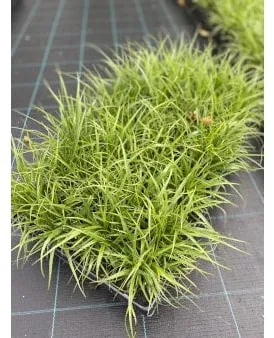
Snow rush (Luzula nivea) is a perennial that forms dense clumps of narrow, green leaves and develops fine, white flower spikes in June. The spikes stand high above the foliage and later turn dark brown, giving the plant a varied appearance throughout the season.
The plant thrives best in partial shade to shade and is therefore suitable for areas where many other plants struggle to grow. It reaches about 30 cm in height in the clump, while the flower spikes can reach up to 60 cm.
Snow rush is evergreen and thus retains its foliage all year round. It is tolerated by grass allergy sufferers as it does not belong to the grass family, and the dried spikes can be used decoratively. For a dense ground cover, a planting density of about six plants per square metre is recommended.
- Evergreen: Retains its foliage all year round and provides structure in the garden during winter.
- Shade tolerant: Thrives in partial shade and shade where many other plants do not survive.
- Decorative flowers: White spikes in June that later turn dark brown.
- Allergy friendly: Tolerated by grass allergy sufferers as it is not a grass species.
- Suitable as ground cover: Forms dense clumps that effectively cover the ground.
Pros and cons
- Robust and easy to establish in shady areas
- Evergreen and decorative all year round
- Requires minimal maintenance
- Can be used as an allergy-friendly alternative to grass
- Prefers moist soil and may perform less well in very dry areas
- The flowering period is short and mainly in June
Pros and cons
Pros
- Robust and easy to establish in shady areas
- Evergreen and decorative all year round
- Requires minimal maintenance
- Can be used as an allergy-friendly alternative to grass
Cons
- Prefers moist soil and may perform less well in very dry areas
- The flowering period is short and mainly in June
Pros
- Robust and easy to establish in shady areas
- Evergreen and decorative all year round
- Requires minimal maintenance
- Can be used as an allergy-friendly alternative to grass
Cons
- Prefers moist soil and may perform less well in very dry areas
- The flowering period is short and mainly in June
Specifications
- Botanical name: Luzula nivea
- Swedish name: Snow rush
- Plant height: Clumps approx. 30 cm, flower spikes up to 60 cm
- Growing conditions: Partial shade to shade
- Planting density: 6 plants per square metre
- Flowering time: June
- Flower colour: White (later turns dark brown)
- Characteristics: Evergreen, tolerated by grass allergy sufferers, spikes can be dried
- Category: Ground-covering perennials
- Main category: Ground cover
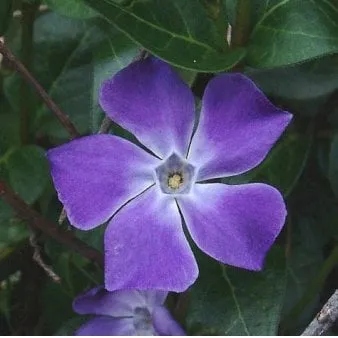
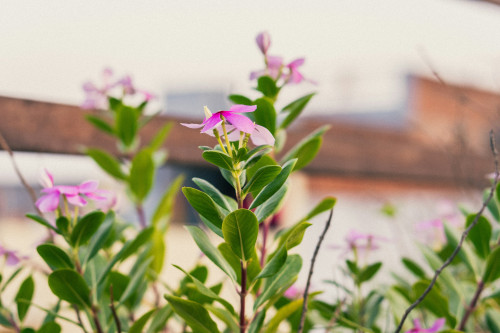
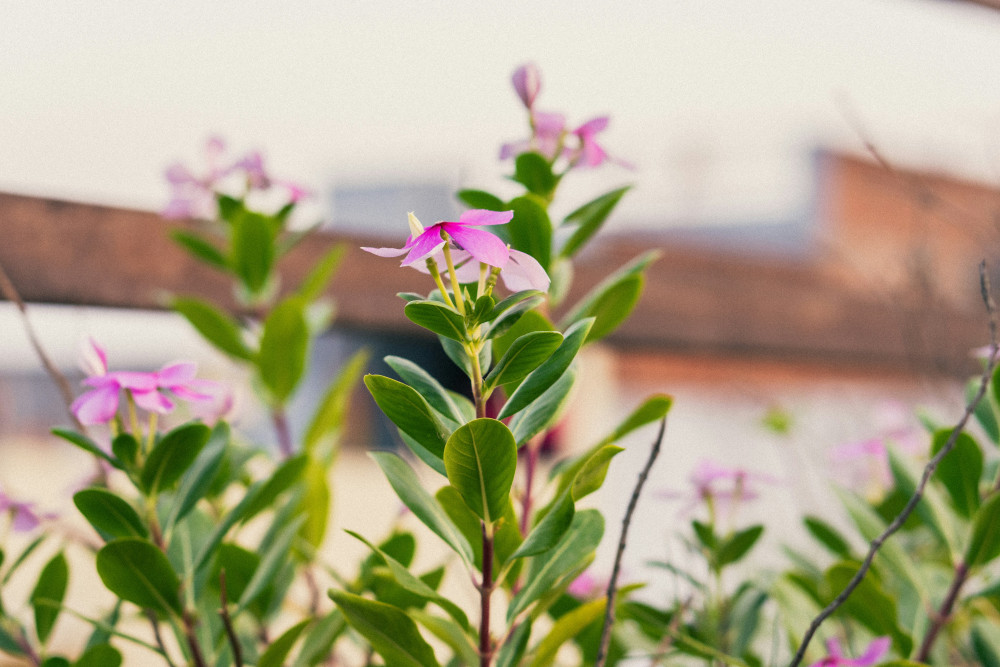
Vinca major, known as large-leaved periwinkle, is a perennial, evergreen plant that forms a dense and green ground cover all year round. It has vigorous growth and broad, glossy leaves that quickly cover gaps in the planting and give a uniform appearance in the bed.
The plant blooms in April and May with large, blue-purple flowers, and there may be a smaller second flowering later in the summer. It is well suited as ground cover under shrubs and trees, where it effectively covers the ground and suppresses weeds.
Large-leaved periwinkle thrives in both sun and shade and places few demands on the soil, as long as there is no standing water in the root zone. It tolerates pruning all year round and maintains its dense growth, making it suitable for both new and established beds.
For optimal coverage, it is recommended to plant 6–9 plants per square metre. It is fully hardy and does well in the Swedish climate, even in more shaded or dry growing sites.
- Evergreen: Retains its green foliage all year round.
- Flowering: Large blue-purple flowers in April–May, often with a second flowering.
- Growth form: Vigorous and ground-covering with rooting branches.
- Light conditions: Thrives in both sun and shade.
- Care: Tolerates pruning all year round and requires minimal maintenance.
Pros and cons
- Fast and dense growth that effectively covers the ground
- Evergreen and decorative all year round
- Tolerates both sun and shade
- Requires little care after establishment
- Suitable for shade beds and underplanting
- Can spread vigorously and requires control in smaller gardens
- Young plants need regular watering to establish
- Does not thrive in soil with standing water
Pros and cons
Pros
- Fast and dense growth that effectively covers the ground
- Evergreen and decorative all year round
- Tolerates both sun and shade
- Requires little care after establishment
- Suitable for shade beds and underplanting
Cons
- Can spread vigorously and requires control in smaller gardens
- Young plants need regular watering to establish
- Does not thrive in soil with standing water
Pros
- Fast and dense growth that effectively covers the ground
- Evergreen and decorative all year round
- Tolerates both sun and shade
- Requires little care after establishment
- Suitable for shade beds and underplanting
Cons
- Can spread vigorously and requires control in smaller gardens
- Young plants need regular watering to establish
- Does not thrive in soil with standing water
Specifications
- Botanical name: Vinca major
- Swedish name: Large-leaved periwinkle
- Plant height: approx. 30–45 cm
- Flower colour: Blue-purple
- Flowering period: April–May (possible second flowering in summer)
- Leaf colour: Fresh green to dark green, glossy
- Light conditions: Sun to shade
- Growth form: Ground-covering, rooting branches
- Hardiness: Fully hardy
- Recommended planting density: 6–9 plants per m²
- Category: Ground cover plant, evergreen
- Pot sizes: 0.8 L, 1 L, 1.5 L
Different types of ground cover plants
Ground cover plants come in many species and varieties, each with its own advantages and uses. Here are some of the most common types.
1. Evergreen ground cover plants
These plants keep their leaves all year round and give the garden a green appearance even in winter. Examples include ivy, cotoneaster and amelanchier. They are ideal for slopes and under shrubs where they form a dense, low mat.
2. Flowering ground cover plants
Flowering varieties such as cranesbill, thyme and wild strawberry add both colour and fragrance to the garden. They attract bees and butterflies and are well suited for borders and edges where they can spread freely.
3. Ground cover plants for shade
In shady areas under trees or along the north side of the house, species such as hosta, ferns and epimedium thrive. They tolerate limited sun and add lushness even where other plants struggle to grow.
4. Ground cover plants for sun and drought
For sunny and dry areas, lavender, thyme and sedum are excellent choices. They require minimal watering and thrive in well-drained soil. These plants are also well suited for rock gardens and slopes.
5. Ground cover plants for moist areas
If you have moist soil, species such as Brunnera macrophylla, sweet woodruff or marsh marigold can be good choices. They thrive in partial shade and contribute a natural, green appearance.
Different brands of ground cover plants
Several nurseries and producers offer high-quality ground cover plants, both as small plants and ready-made mat-forming solutions.
Plantetorvet
Plantetorvet offers a wide range of ground cover plants for both sun and shade. The range extends from classic species such as ivy to more decorative varieties such as cranesbill and lavender.
Jespers Planteskole
At Jespers Planteskole, there is a large selection of ground cover plants delivered directly from Danish nurseries. The focus is on hardy varieties suitable for the Nordic climate.
Lundhede Planteskole
Lundhede is known for its wide range and good advice. They offer both traditional and modern ground cover plants suitable for everything from private gardens to larger landscaping projects.
Plantorama
Plantorama combines physical stores and online sales and offers ground cover plants in many sizes. The range includes both flowering and evergreen varieties, often with a focus on easy maintenance.
Bilka Havecenter
Bilka Havecenter has an affordable selection of ground cover plants that are easy to plant and care for. The range is continuously updated with the season's most popular varieties.
Frequently asked questions
What is the purpose of ground cover plants?
Ground cover plants protect the soil from drying out, suppress weeds and create a green, cohesive look in the garden. They can also improve soil structure and attract beneficial insects.
How close should ground cover plants be planted?
The spacing depends on the plant's growth habit. Generally, 6–9 plants per square metre are planted to quickly achieve a dense cover. Fast-growing species can be planted slightly further apart.
When is the best time to plant ground cover plants?
Spring and autumn are the best times because the soil is moist and the temperature mild. This gives the plants the best conditions to establish themselves.
Should ground cover plants be watered?
Yes, especially during the establishment phase. Once the plants have formed a dense root system, they only need watering during longer dry periods. Drought-tolerant species such as sedum and thyme, however, require minimal care.
Can ground cover plants be used in pots?
Some low-growing varieties, such as thyme and wild strawberry, are well suited for pots and balcony boxes. They provide a green and flowering appearance and require little maintenance.
Læs også: